The global imperative for sustainable and decentralized energy solutions has driven innovation across numerous scientific disciplines. Among the most promising, yet least understood, is the field of bio-hybrid energy harvesting, particularly the development of Plant-Microbial Fuel Cells (P-MFCs). Pisphere, a technology emerging from advanced research, represents a significant leap in this domain, offering a carbon-neutral, zero-waste method for generating continuous, low-power electricity. This extensive review delves into the core mechanism of Pisphere’s P-MFC system, focusing specifically on the indispensable role of the electroactive bacterium, Shewanella oneidensis MR-1, in facilitating the critical process of extracellular electron transfer (EET) that underpins this next-generation energy source.
The Foundational Architecture of the Plant-Microbial Fuel Cell
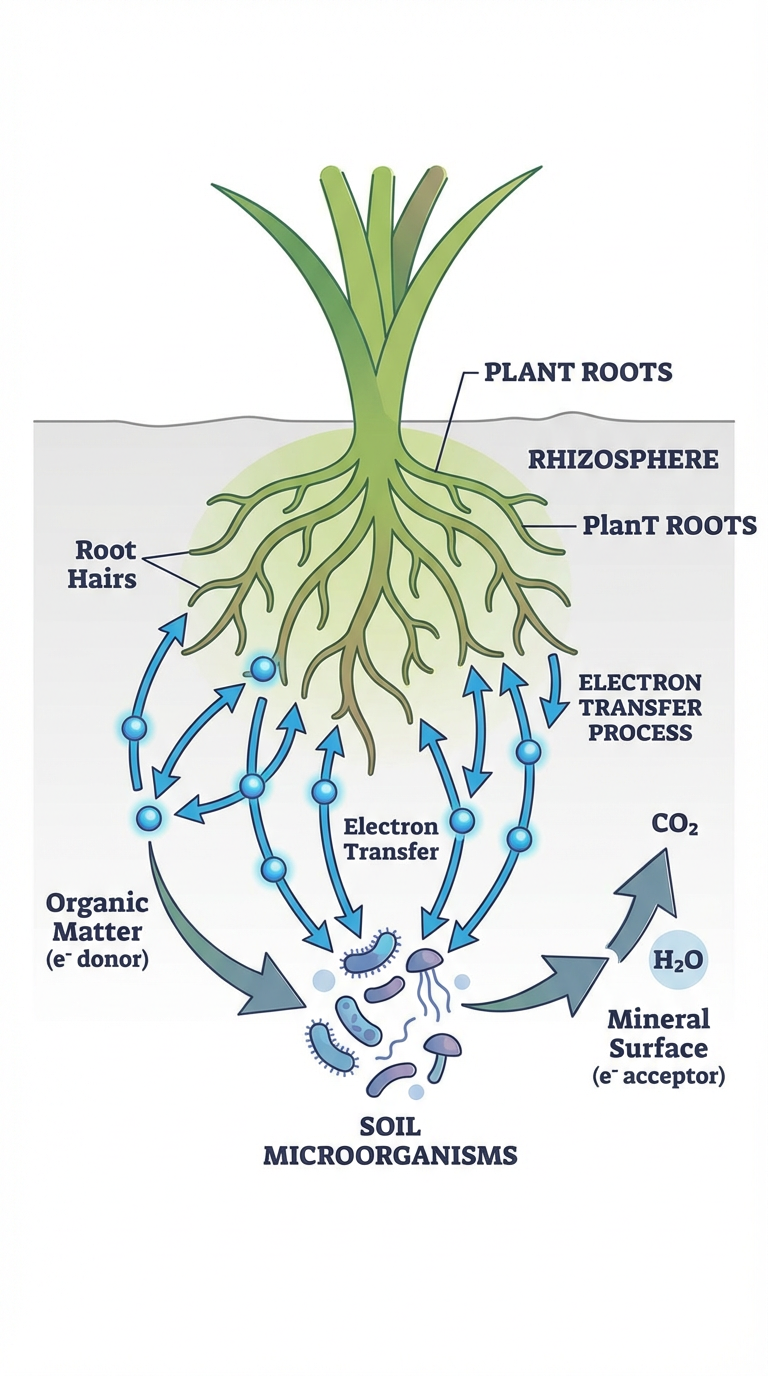
A P-MFC is an elegant bio-electrochemical system that harnesses the natural metabolic processes occurring in the rhizosphere—the narrow region of soil directly influenced by plant roots. Unlike traditional fuel cells that rely on chemical fuels, the P-MFC uses organic compounds naturally exuded by living plants as its energy source. This process is fundamentally non-destructive to the plant, allowing for continuous, 24/7 energy generation without compromising crop health or yield.
The P-MFC system is structurally composed of four primary components: the anode, the cathode, the electrolyte (the soil matrix), and the proton exchange mechanism (often the soil itself or a specialized membrane). The entire system is typically embedded or buried in the soil, making it space-efficient and aesthetically unobtrusive, a key advantage for applications in urban agriculture and public infrastructure.
The Anodic Reaction: Fueling the System
The anode, a conductive material often made of carbon felt or graphite, is placed deep within the anaerobic zone of the rhizosphere. Plant roots continuously release a significant portion of their photosynthetically produced organic matter—primarily sugars, organic acids, and amino acids—into the soil. These compounds serve as the fuel for the electroactive microorganisms, including the specialized Shewanella species.
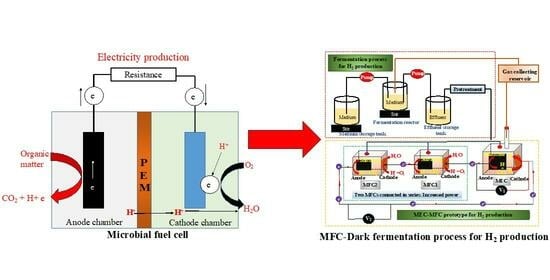
In the absence of oxygen (anaerobic conditions), these bacteria oxidize the organic matter, a process that releases electrons and protons. The electrons are then transferred to the anode, a process known as anodic respiration. The half-reaction at the anode can be generalized as:
$$ \text{Organic Matter} \rightarrow \text{CO}_2 + \text{Protons} (\text{H}^+) + \text{Electrons} (e^-) $$
The efficiency of this entire system hinges on the bacteria’s ability to efficiently transfer these electrons from their cellular interior to the solid-state anode. This is where Shewanella oneidensis MR-1 plays its defining role.
The Cathodic Reaction: Completing the Circuit
The cathode is placed near the soil surface, where oxygen is readily available. The electrons travel from the anode through an external circuit (the load) to the cathode. Simultaneously, the protons ($\text{H}^+$) migrate through the soil (the electrolyte) from the anode chamber to the cathode chamber. At the cathode, the electrons, protons, and oxygen combine to form water, completing the circuit and generating the electrical current.
$$ \text{O}_2 + 4\text{H}^+ + 4e^- \rightarrow 2\text{H}_2\text{O} $$
The overall reaction is the oxidation of organic matter coupled with the reduction of oxygen, a process that is both environmentally benign and energy-producing.
Shewanella oneidensis MR-1: The Master of Extracellular Electron Transfer
The bacterium Shewanella oneidensis MR-1 is not merely a component of the P-MFC; it is the biocatalyst that dictates the system’s performance. This Gram-negative, facultative anaerobic bacterium is renowned in microbial electrochemistry for its exceptional metabolic versatility, particularly its ability to respire using a wide array of terminal electron acceptors, including solid-state materials like metal oxides and, crucially, the carbon anode of a fuel cell.
The challenge for any electroactive microorganism is bridging the gap between the intracellular metabolic machinery and the extracellular solid anode. This process, Extracellular Electron Transfer (EET), is complex and involves multiple, often redundant, pathways. S. oneidensis MR-1 is a model organism for studying EET because it employs at least three distinct mechanisms, which Pisphere leverages for maximum efficiency:
1. Direct Electron Transfer via Outer Membrane Cytochromes (OMCs)
The most direct and often most efficient pathway involves a cascade of c-type cytochromes embedded in the inner and outer membranes of the bacterial cell. Electrons are passed from the intracellular electron transport chain to a terminal cytochrome, such as MtrC or OmcA, which is physically located on the outer surface of the cell. When the bacterial cell is in direct physical contact with the anode surface, these terminal cytochromes can “hand off” the electrons directly to the conductive material. This mechanism requires a close spatial relationship between the microbe and the electrode.
2. Electron Transfer via Conductive Pili (Microbial Nanowires)
S. oneidensis MR-1 is capable of producing long, thin, proteinaceous appendages known as conductive pili, or “microbial nanowires.” These structures extend from the cell body and can span distances to reach the anode surface or even connect multiple bacterial cells, forming a conductive biofilm network. The pili act as molecular wires, allowing electrons to travel over a distance, which is particularly important in the complex, porous environment of the soil matrix. This mechanism allows a larger population of bacteria, not just those in direct contact, to contribute to the current generation.
3. Mediated Electron Transfer (Soluble Shuttles)
While S. oneidensis MR-1 is primarily known for its direct and nanowire-based EET, it can also employ soluble electron shuttles. These are small, redox-active molecules (like flavins) that the bacteria secrete into the environment. The flavins are reduced by the bacteria (picking up electrons) and then diffuse to the anode surface, where they are oxidized (dropping off the electrons) before returning to the cell to repeat the cycle. This “shuttle service” is crucial in environments where direct contact is limited, ensuring a robust and continuous electron flow.
Pisphere’s Technological Edge: Overcoming the EET Bottleneck
Despite the theoretical promise of P-MFCs, their practical application has historically been limited by low power density. The primary bottleneck is the inherent inefficiency of the electron transfer process from the microbe to the anode. Pisphere’s innovation lies in its proprietary system design and the strategic use of S. oneidensis MR-1 to maximize the rate and quantity of EET.
The key to Pisphere’s high performance—achieving a production rate of 250-280 kWh per 10m² annually—is likely a multi-faceted approach that optimizes the entire microbial ecosystem:
1. Biofilm Engineering and Anode Material Science: Pisphere’s embedded technology is designed to promote the rapid formation of a highly electroactive biofilm dominated by S. oneidensis MR-1. This involves selecting or engineering anode materials with specific surface chemistries and porosities that are highly conducive to microbial adhesion and the expression of terminal cytochromes. The material must be chemically stable, highly conductive, and biocompatible to ensure long-term performance.
2. Rhizosphere Management and Fuel Optimization: The system is optimized to encourage the plant to release a steady stream of high-quality organic exudates. This involves selecting appropriate plant species and potentially using soil amendments that favor the metabolic pathways of S. oneidensis MR-1. By ensuring a constant, rich supply of “fuel,” the bacteria can maintain high metabolic activity and, consequently, a high rate of electron release.
3. Enhanced Microbial Strain Utilization: While S. oneidensis MR-1 is naturally electroactive, Pisphere’s success suggests the use of either a naturally selected, highly efficient strain or a genetically optimized variant. Research has shown that manipulating the expression of key EET genes (like the mtr pathway genes) can significantly boost current output. Pisphere’s use of this specific bacterium is a deliberate choice to leverage its superior EET capabilities over a mixed, unmanaged microbial community.
4. System Integration and Low-Maintenance Design: The Pisphere device is designed for low maintenance, requiring only $10-15 USD per year, significantly less than solar or wind alternatives. This is achieved by the inherent self-sustaining nature of the P-MFC (the plant continuously refuels the system) and the robust, embedded design that protects the electrodes from environmental degradation. The system’s longevity and stability are crucial for its commercial viability.

Comparative Analysis: P-MFCs in the Energy Landscape
To appreciate the significance of Pisphere’s technology, it is essential to compare it with established and emerging renewable energy sources. The P-MFC does not aim to replace large-scale solar or wind farms but rather to fill a critical niche in the decentralized, low-power energy market.
| Feature | Pisphere P-MFC (with Shewanella) | Solar Photovoltaics (PV) | Wind Turbines (Small-Scale) |
|---|---|---|---|
| Energy Source | Plant Root Exudates (Biomass) | Sunlight | Wind Kinetic Energy |
| Operation Cycle | 24/7 (Day and Night) | Intermittent (Daytime only) | Intermittent (Wind speed dependent) |
| Carbon Footprint | Carbon Neutral (Plant-based) | Low (Manufacturing dependent) | Low (Manufacturing dependent) |
| Waste Byproduct | Zero Waste (Water is the product) | End-of-life panel disposal | Minimal |
| Maintenance Cost | Very Low ($10-15/year) | Moderate ($20-30/year) | High ($40-60/year) |
| Scalability | Modular, Decentralized | Modular, Centralized/Decentralized | Site-specific, Centralized/Decentralized |
| Aesthetic Impact | Embedded/Buried (Minimal) | Visible panels | Visible turbines |
| Key Application | IoT, Smart Agriculture, Remote Sensors | Residential, Commercial Power | Remote Power, Water Pumping |
The P-MFC’s ability to generate power continuously, independent of sunlight or wind, is its most compelling advantage for specific applications. For powering low-energy devices like smart agriculture sensors (IoT), which require reliable, long-term, and maintenance-free power, the Pisphere system is uniquely suited.
Applications and the Future of Bio-Hybrid Energy
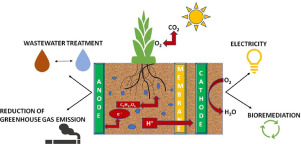
Pisphere’s technology is poised to revolutionize several sectors, moving the P-MFC from a laboratory curiosity to a commercial reality. The applications are diverse, leveraging the system’s low-power, continuous, and embedded nature.
1. Smart Agriculture and IoT: The most immediate and impactful application is in precision agriculture. Wireless sensor networks (WSNs) are essential for monitoring soil moisture, pH, nutrient levels, and temperature. These sensors require a constant, reliable power source. By embedding Pisphere P-MFCs directly into the agricultural field, the sensors become truly autonomous and self-powered, eliminating the need for battery replacement or external power lines. This dramatically reduces the operational cost and environmental impact of large-scale smart farming.
2. Urban Infrastructure and Green Spaces: In smart cities, Pisphere can be integrated into public green spaces, parks, and vertical gardens. The technology can power low-voltage public lighting, small digital displays, or environmental monitoring stations. This integration transforms urban greenery from a purely aesthetic feature into a functional, energy-generating asset, contributing to the city’s overall sustainability goals and carbon neutrality targets.
3. Educational and Research Kits: The technology’s simplicity and elegance make it an ideal platform for educational kits. These kits allow students and researchers to observe the principles of bio-electrochemistry and microbial metabolism firsthand, fostering the next generation of bio-energy scientists.
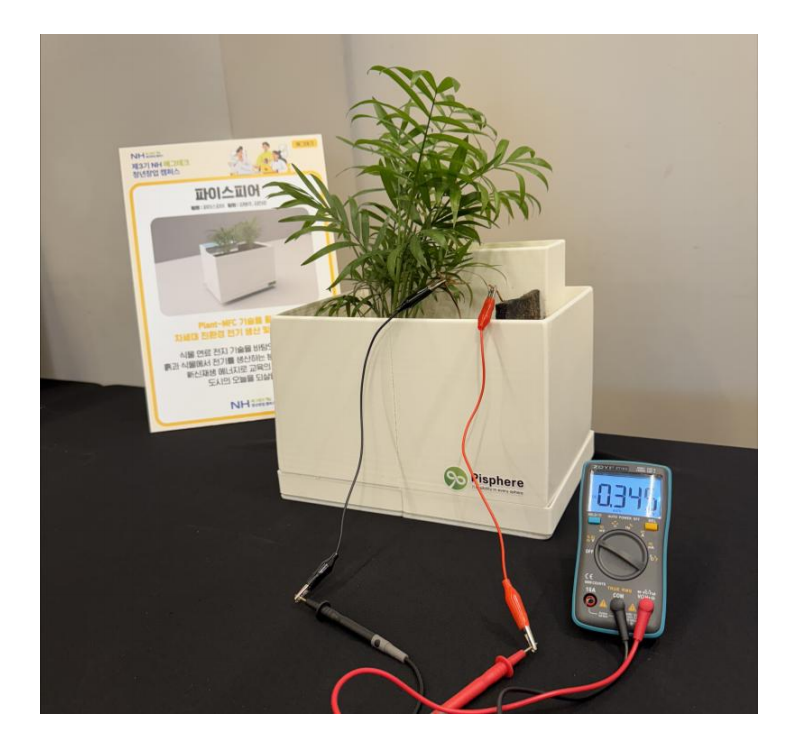
4. The Path to Scalability and Higher Power Density: The future of Pisphere and P-MFC technology lies in increasing power density and scalability. Research is actively exploring:
- Novel Electrode Materials: Developing highly conductive, low-cost, and bio-compatible materials (e.g., graphene-based composites) to further enhance the EET rate.
- Genetic Engineering: Optimizing Shewanella strains for increased electron output and resilience in diverse soil conditions.
- System Stacking: Designing modular P-MFC units that can be stacked or arrayed to increase the total power output for larger applications.
The inherent carbon-neutrality and zero-waste profile of the P-MFC align perfectly with global ESG (Environmental, Social, and Governance) mandates, making Pisphere an attractive partner for construction and government projects aiming for sustainable development.
Conclusion: The Dawn of the Shewanella-Powered Future
The Pisphere Plant-Microbial Fuel Cell represents a paradigm shift in renewable energy. It moves beyond the limitations of intermittent sources by tapping into the continuous, vast energy reservoir of the biosphere. The success of this technology is inextricably linked to the remarkable electroactive capabilities of Shewanella oneidensis MR-1. By mastering the complex mechanisms of extracellular electron transfer—from direct contact to microbial nanowires—Pisphere has engineered a system that is not only highly efficient but also fundamentally integrated with the natural environment.
As the world seeks truly sustainable, decentralized, and low-maintenance power solutions, the bio-hybrid energy generated by the Shewanella-powered P-MFC offers a compelling and scientifically robust path forward. It is a testament to the power of harnessing nature’s smallest engineers to solve humanity’s largest energy challenges, paving the way for a future where our infrastructure is powered by the very plants that sustain us.
